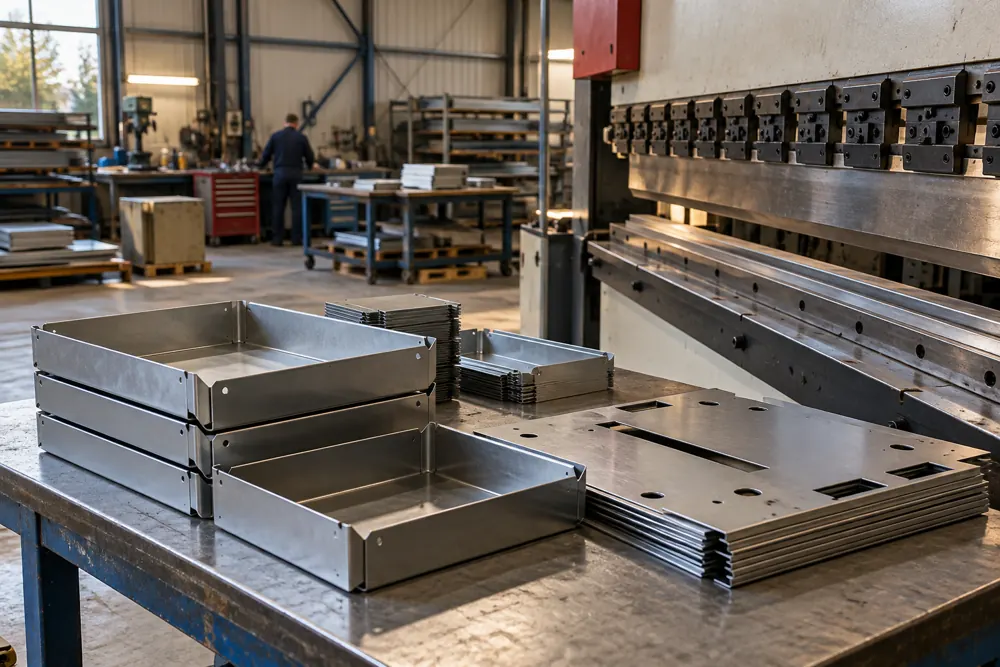
From Flat Sheet To Finished Component
Sheet metal work turns a flat blank into a useful part through cutting, forming and joining. Typical enquiries include plant covers, folded trays, cabinet panels, duct transitions and non-pressurised equipment enclosures. A successful part needs to fit the adjoining assembly and remain practical to handle, clean and maintain.
The starting point is the component’s purpose. A removable inspection cover needs different edges and fastenings from a permanently mounted tray. Tell us whether the part needs to keep out dust or water, carry a load, protect a moving component or simply close an opening.
Material And Bend Details
Specify the material type, grade and thickness where the design calls for them. Mild steel, stainless steel and aluminium have different forming and finishing requirements, so a substitution needs approval. Thickness changes also affect stiffness, weight, bend allowances and the space occupied by an assembled part.
A folded component cannot always be treated as a sharp-cornered drawing. Internal bend radii, flange lengths and the distance from holes to bends influence how it can be manufactured. Supply a dimensioned drawing or suitable model and identify the dimensions that matter most to the fit.
Cutting, Folding And Joining
The manufacturing route depends on geometry, quantity and material. Profiles may be cut before bending, with holes and slots positioned to suit the finished shape. Where parts are joined, the detail needs to account for access, distortion and whether the connection must remain removable.
A tray with welded corners may behave differently from a folded assembly with sealed mechanical joints. If appearance matters, define which faces are visible and what surface condition is acceptable. Agree any sample or first-off approval before a batch is released, particularly when several parts share the same mating features.
Safety And The Intended Use
The rules follow the finished application, rather than the thickness of the sheet. Machine guards need to be considered within the machinery risk assessment and the Provision and Use of Work Equipment Regulations 1998 where applicable. A made-to-size cover is not automatically an adequate safety guard.
Structural sheet components may need a separate structural specification and conformity assessment. Equipment intended for pressure containment, food contact or electrical protection also needs its own design requirements. State these uses at enquiry stage so the scope does not rely on an assumption about what an enclosure must achieve.
Finishes, Edges And Assembly
Deburring and edge treatment affect safe handling as well as appearance. Specify exposed edges, cable penetrations and any areas where a user will grip the component. For coated parts, masking, earth points, threaded features and contact faces should be identified before the finishing route is agreed.
Finish selection should reflect the operating environment and cleaning method. Water traps, overlapping joints and inaccessible cavities deserve attention in the design. If a part will be installed against dissimilar metals, ask the designer to specify suitable separation and fixings rather than leaving compatibility to the assembly stage.
Costs And A Useful Drawing Pack
Quotations depend on sheet utilisation, cutting detail, bend count, joining time and batch quantity. Small batches can carry a larger share of setup time per component. Complex finishing, inspection requirements and individually packed visible faces also affect the allowance.
Send the drawing revision, quantity, material specification and intended finish together. State whether dimensions refer to inside or outside faces and identify critical tolerances. If you are replacing an existing component, include photographs and explain why the original needs replacement so that an underlying fit or drainage problem is not repeated.
Your Questions Answered
Can You Work From A Sheet Metal Sample?
A sheet metal sample can help explain the intended shape, but it needs checking against the required dimensions and use. Wear, distortion or an earlier repair may have changed the original. We agree the material, thickness, mounting points and drawing approval route before treating a replacement as ready for manufacture.
What Makes Sheet Metal Fabrication More Expensive?
Sheet metal fabrication cost rises with complicated profiles, multiple bends, awkward assembly and demanding finishes. Material grade, batch quantity and the need for first-off approval also matter. A clear drawing that identifies critical dimensions helps avoid unnecessary tolerance requirements and makes quotations easier to compare on the same manufacturing scope.
Technical References
Read the relevant HSE work equipment guidance, structural steel conformity guidance and Approved Document K. The project designer should confirm which requirements apply to the work.