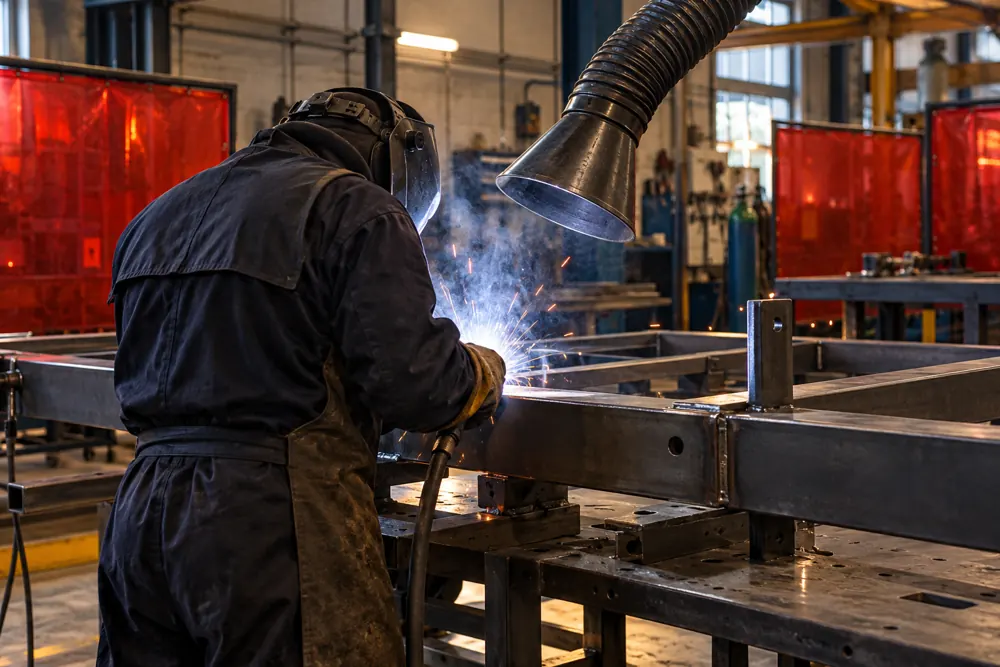
A Weld Is Part Of A Joint
Welding needs to connect the right materials in a joint designed for the intended load and environment. More weld is not automatically a better result. Joint preparation, fit-up, welding sequence and inspection all contribute to the performance of the finished assembly.
Our enquiry process distinguishes new manufacture from repairs to an existing item. For new work, send the approved drawing and weld details. For a repair, explain what failed, how the item is used and whether an engineer or equipment manufacturer has already assessed the cause.
Repair Assessment Before Repair Work
A cracked joint can indicate fatigue, movement, corrosion or a change in loading. Welding over the visible crack without understanding the cause may leave the underlying problem in place. The repair scope should identify the material, the extent of damage and any inspection needed before a method is agreed.
Some items should remain out of use until the responsible competent person has assessed them. Lifting equipment, pressure-containing parts and safety-critical assemblies require specialist review. Do not treat an initial welding enquiry as confirmation that a component can return to service.
Preparation And Workshop Sequence
Material and coating identification come before cutting or welding. Oil, paint, galvanising and other surface treatments can affect both weld quality and the controls needed for the task. Access to the root and both sides of the connection may influence the joint detail and the manufacturing sequence.
Assemblies need to be held and checked during fit-up. Welding introduces heat, so distortion control matters where the finished component must match adjoining parts. Agree the dimensions to inspect and whether the specified application calls for additional weld examination or documented acceptance criteria.
Welding Fume And Site Controls
HSE guidance calls for suitable control of exposure to welding fume. Indoor work needs effective engineering controls, such as local exhaust ventilation, with suitable respiratory protection where those controls are insufficient. Outdoor work also needs appropriate controls based on the task and exposure assessment.
At a live commercial site, hot work planning also needs to address nearby combustible materials, other workers and isolation of equipment. Agree the permit arrangements, screening and fire precautions with the site team. Restricted spaces or unknown coatings can change whether a proposed repair is suitable for site welding.
Specifications And Competence
For structural work, the project specification should set the execution requirements and the applicable welding and inspection controls. Ask what evidence is needed for welding procedures, personnel competence and traceability. Those requirements should be agreed before work is ordered, rather than requested for the first time after completion.
For machinery repairs, the manufacturer’s instructions and the equipment risk assessment may limit how a component can be altered. PUWER duties remain relevant to the business using that equipment. A repaired assembly should be checked against the agreed acceptance requirements before the dutyholder authorises its return to use.
How Joint Preparation And Access Affect Welding Costs
Joint access, material thickness, preparation and the length and complexity of the weld affect workshop time. Removing coatings, dismantling an assembly and inspecting a repair can take longer than the visible welding itself. Site work may also need travel, access equipment, permits and coordination around production.
Send photographs of the whole assembly and close views of the affected detail, along with dimensions and any known material specification. Explain whether the item can be brought into a workshop and how it will be handled. We use that information to identify the next assessment step and define the limits of a quotation.
Your Questions Answered
Can A Cracked Steel Component Be Welded?
A cracked steel component needs assessment before a welding repair is agreed. The material, loading and reason for the crack affect whether repair is appropriate. An engineer or equipment specialist may need to specify the method and inspection, particularly for structural, lifting or safety-related parts, before the item can be returned to service.
Is Site Welding Always The Best Option?
Site welding is not always the best option when an assembly can be removed safely for workshop work. Access, weather, fume controls and nearby operations all affect the decision. Tell us about isolation, permits and removal possibilities so the scope can compare a controlled workshop repair with the practical requirements of working at the premises.
Technical References
Read the relevant HSE work equipment guidance, structural steel conformity guidance and Approved Document K. The project designer should confirm which requirements apply to the work.